Over the years as surfboard makers, we have taken on some bizarre projects. One in the mid-70s was a Fletcher Jones sign for one of their stores in Adelaide. It came about through a request from a junior team rider, Peter Prouten, whose dad had a senior position with FJs. The letters had to be at least 4 feet tall by 6 inches thick, and then glassed so they were bird-proof. The block foam was very difficult to hand-shape as it was both flexible and hard to position on a shaping stand, but in the end, we and FJs were both very happy with the result. Today, this task would be way simpler on Fordy’s CAD machine.
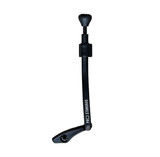
Ted Bainbridge, of course, was the instigator of many unusual requests. There was the fitting of a marine speedometer, many wacky fin concepts, and a 6'6" Mini Mal that was probably the forerunner of the stubby—but some twenty years earlier. Probably his greatest contribution, though, was the creation of the very first fibreglass sailboard made in Victoria.
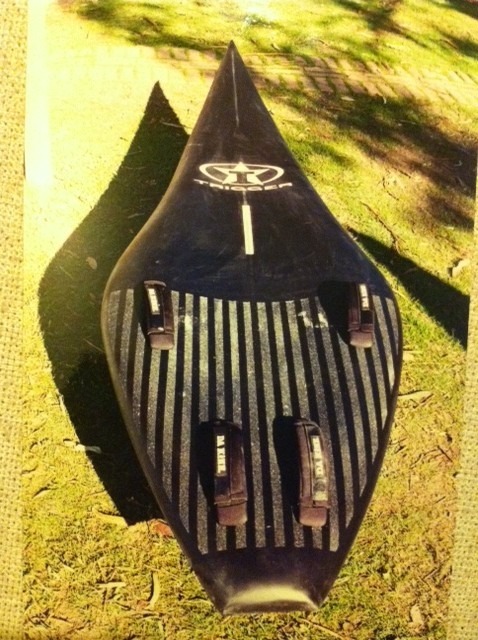
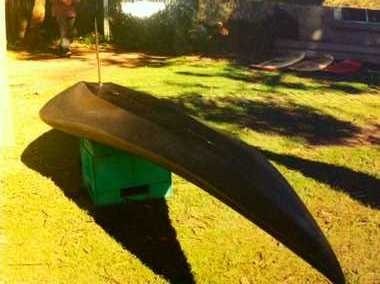
Alan Adams, a good friend of Ted, had commissioned a craft from Tasmania, and within weeks, the adventure man Ted had us on the job. I followed his instructions but questioned whether it had to be so boat-like: a big square tail, really full boxy rails, and a daggerboard kind of setup in the centre. Of course, there were plastic sailboards about, but to be at the forefront of a new sport is something that Phil, Ted, and I are extremely proud of. Mind you, initially, surfboard manufacturers like us were heavily frowned upon by the general surfing community and other board makers.
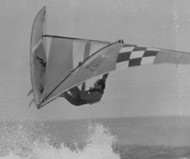
We pushed on regardless with a virtual monopoly, seeing the production of eight sailboards a week over the summer months. Luckily, we had other shapers and John Jolly glassing so that our shortboard market didn’t miss a beat. The sport of wavejumping flourished with the likes of Rip Curl sponsoring events at Pt. Danger, Torquay, which drew high-profile overseas competitors like Robby Naish, Pete Cabrinha, local star Midget Farrelly, and stacks of others. By the late 70s, even Michael Peterson was into making wavejumpers when based at Merimbula.
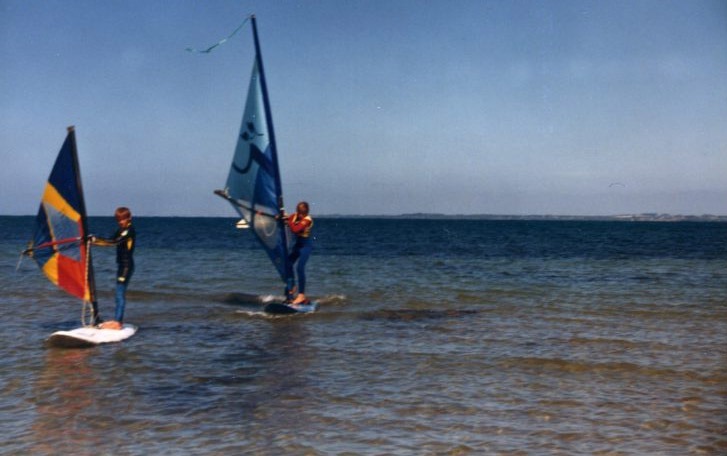
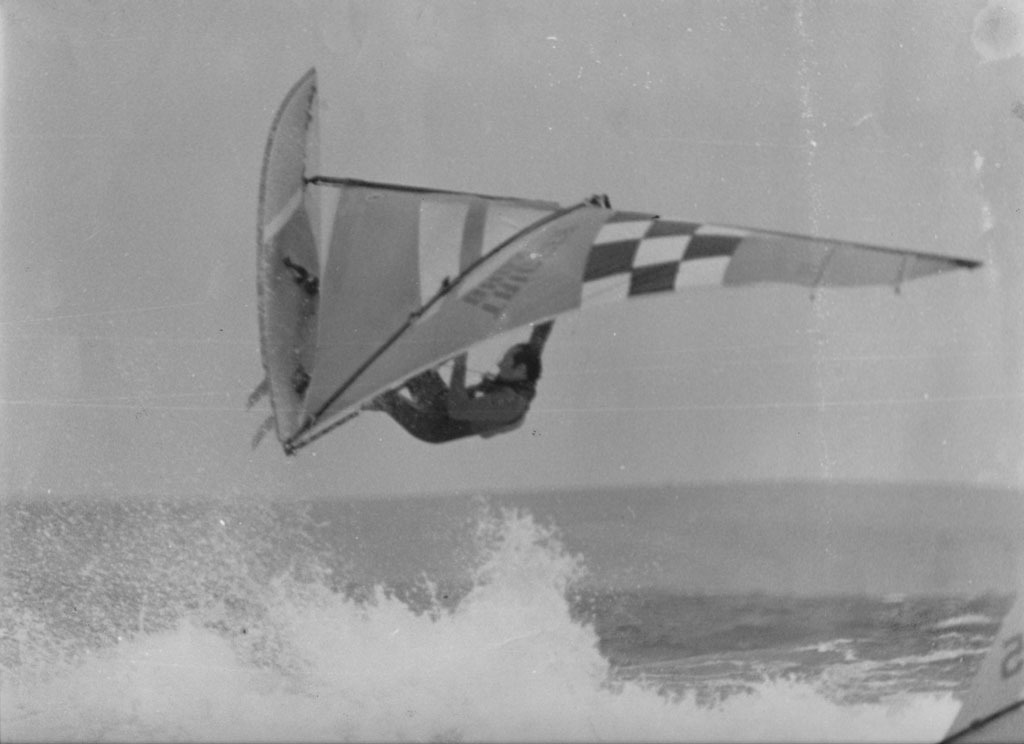
A couple of early shots including Simon and Matt Trigger on kids rigs and Phil Trigger wave jumping at Point Leo
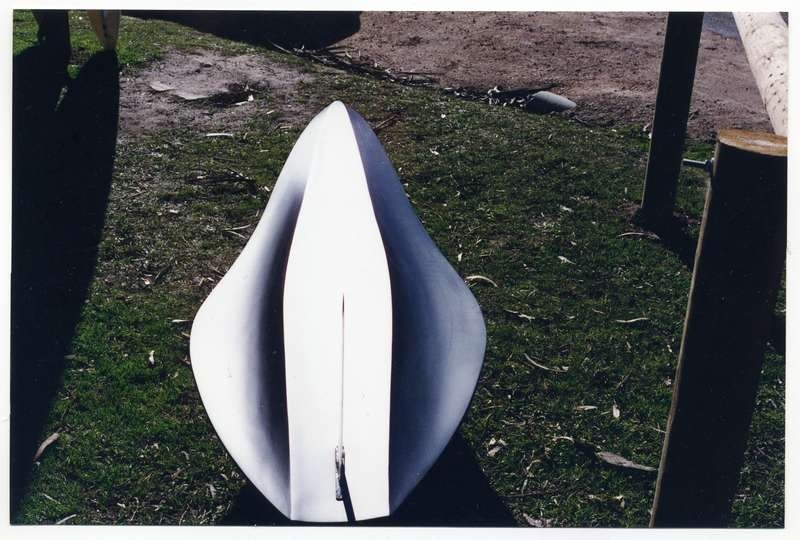
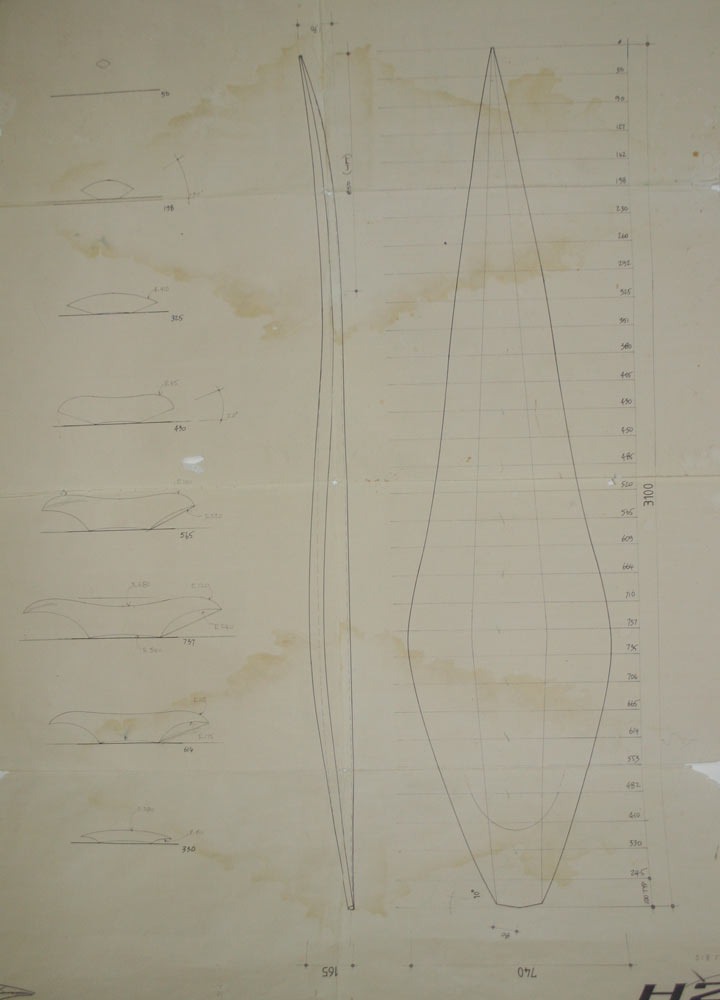
Our history in this new sport was obviously why we were chosen to take on the most radical board we have ever put together. A company comprising two partners called H2O walked through the door at Chelsea with a set of plans and a 1-metre, scaled-down model (it was actually exactly half-sized). It had been water-tank tested, and they were wanting to produce a full-scale model at 10'6" to set a new world speed-sailing record. It was like nothing we had ever seen before; the model looked more like a Stealth bomber, its wings mimicking a stingray when gliding back to the ocean floor.
The bottom shape was a myriad of concaves at different angles, and it took a few days just to come up with a series of measurements to go by. To add to the mystery, Stuart was with me when we had to sign a confidentiality agreement. Even when looking back, he swears I told everyone about and showed off this new shape to every single visitor who entered the store! Phil, of course, was no better when the shape arrived at Leo for glassing—but in fairness, I had forgotten to tell him about the agreement I had signed. The “Blabber Bros” were in full swing.
H2O developed a new fixed-wing sail to go with the sailboard, and Matt Trigger, having signed another confidentiality agreement, tested this futuristic rig on his sailboard on three occasions off Frankston, each time having to swim back in. With a little further development, this design went on to break the world speed-sailing record when applied to catamaran hulls a few years later. If that board were still intact today, it would certainly be one hell of a museum piece.
Triggs