The Evolution of the Twin Fin
When we shaped our first 8-foot surfboard in March 1968, the drop-down from the massive 10-foot loggers was a huge step. Our first attempt at riding these revolutionary boards was at Duranbah, Tweed Heads, on a Graeme Merrin surfboard called the "Growler" in late December 1967. Phil was quicker to learn than I was. Maybe his bigger feet provided some extra stability; at any rate, knee paddling would soon become a lost art. From that moment, the need for more manoeuvrability on a wave saw board lengths spiralling shorter and shorter with every new model.
If someone had told us we would be riding 5-foot-4-inch twin fins by 1971, just three years later, we would have laughed. No one, perhaps with the exception of George Greenough, could have predicted that. George had built a Velo balsa wood spoon in 1962 set up as a twin fin.
Surfboards under 6 feet long were favoured by most of the Aussies for the 1970 World Titles held between Bells and Johanna. Midget Farrelly was the exception, securing a well-deserved second place. Ted Bainbridge, Phil, and I went down to observe the best surfers in the universe. We expected a win for Wayne Lynch or Nat Young, but both, in our eyes, struggled in the larger surf, while a young Californian goofy-footer on a 7-foot board clearly was the outstanding surfer and took the title (Rolf Arness).
Now, what does all this have to do with twin fins? Well, following the event, the immediate reaction was for surfboard designs here in Australia to go bigger. Torquay local Pat Morgan produced his famous Keel Fins, all around the 7-foot mark, and at Trigger Bros, we shaped up diamonds, pins, and square tails from 6-foot-4 to 6-foot-8. Meanwhile, trendsetter Rolf Arness, upon returning to the United States, collaborated with U.S. champion Corky Carroll to design some of the first-generation twin fins.
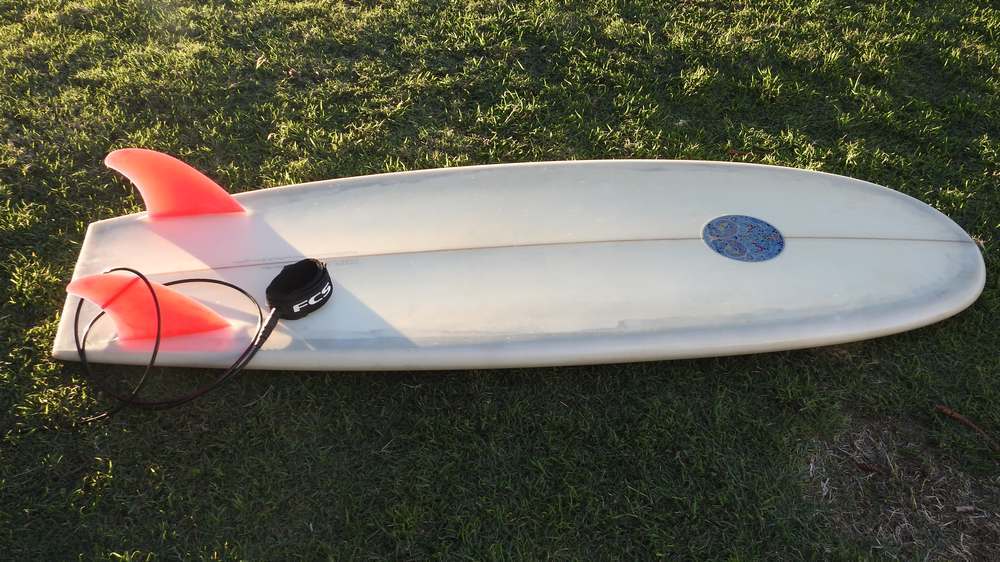
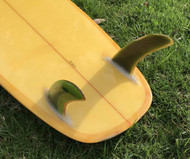
By late 1971, Phil and I were both riding 5-foot-4 twinnies. Mine had a large, rounded square tail not unlike a kneeboard; in fact, I passed it on to Robbie McCartney, a Victorian Kneeboard Champion in the early seventies. Phil’s board had the half-moon swallowtail we had seen on the Merrin Growler. Internationally, these surfboards are labelled "Twin Fin 1." They were short, thick, and pretty ugly, with the fins attached right on the tail.
6’2″ Klemm Bell 1st generation Twin Fin in mint condition courtesy of Gytis Tamasauskas
|
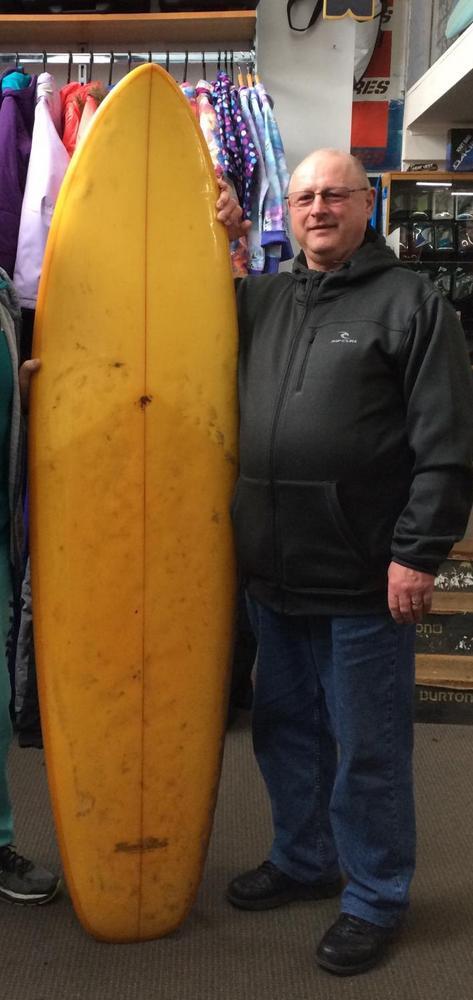
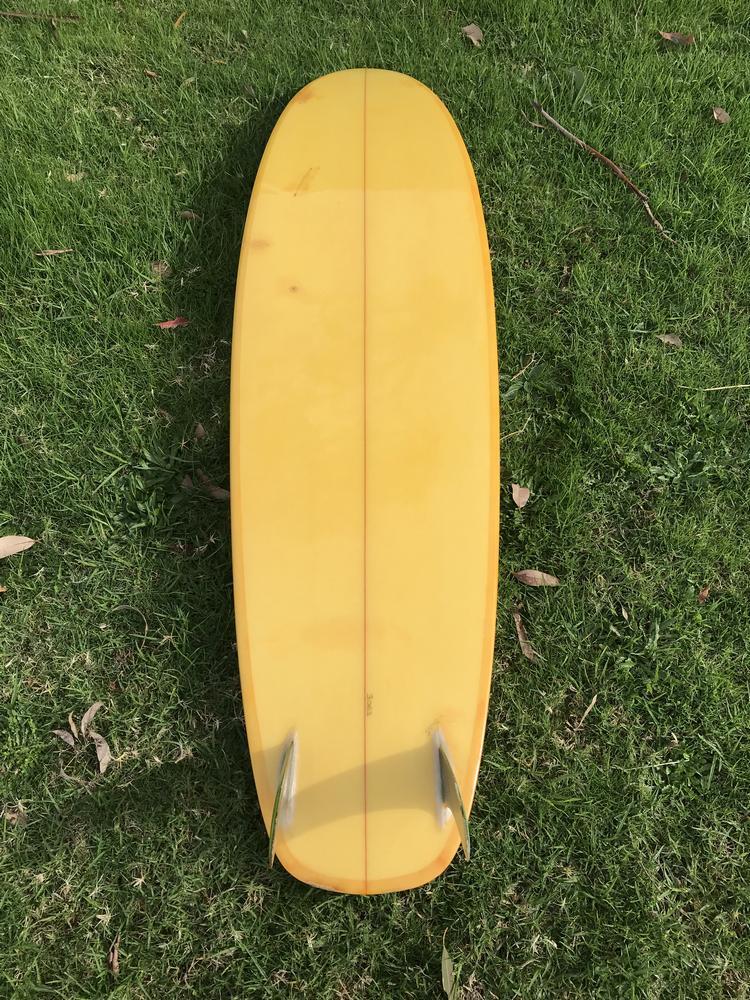
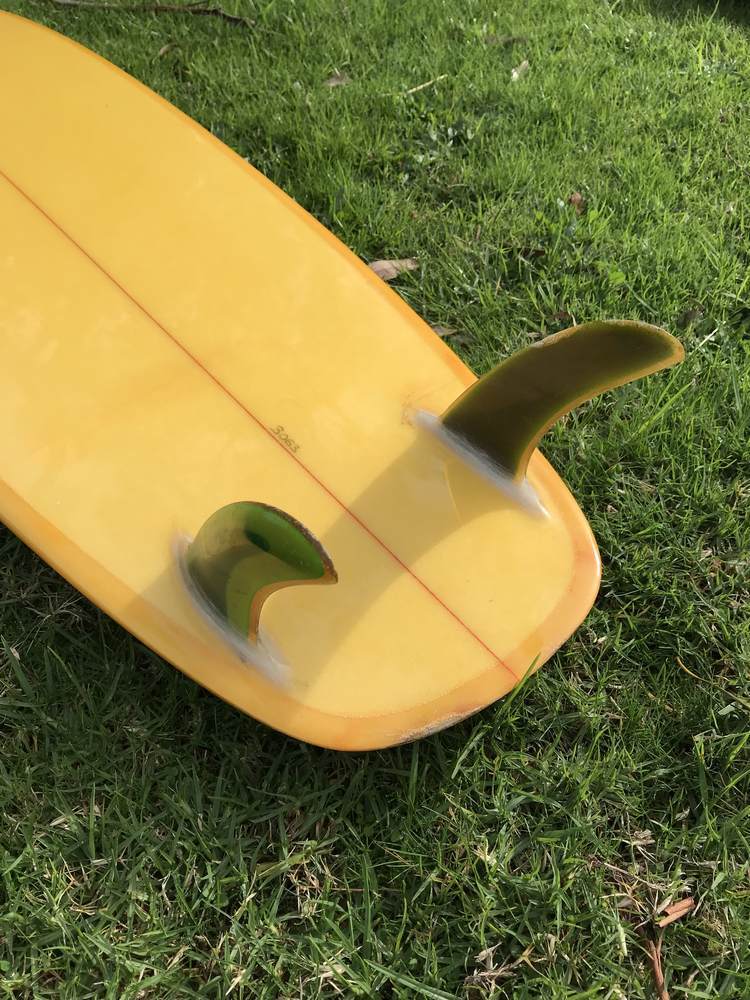
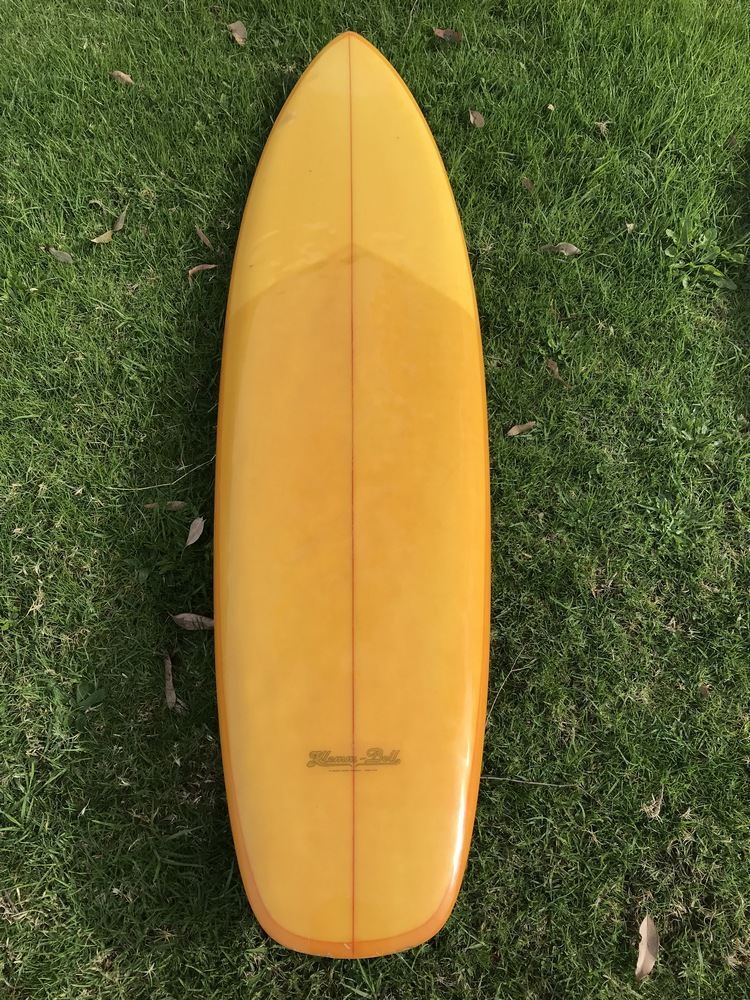
Just where to locate the fins saw us placing them on boards, testing them, then grinding them out andreplacing them dozens of times over before we came up with the right angle to the nose and camber. We had a couple each, but before you could blink, they were shelved by pretty much all the major surfboard manufacturers in Australia. Perhaps if we had all glassed the fins further up from the tail, as they are positioned today, it may have been a different story.
The Parkinson brothers from Portsea, along with their shaper Jeff Coker, were major fans of the twins. I can clearly remember surfing with them at Portsea during a mid-week summer session in 1972 on the best waves Phil and I have ever seen in front of the clubhouse. The swell was up to 8 feet on a double-to-triple-up bank, hideously hollow, shallow, and with a crazy rip. I can’t recall having seen a triple-up wave since that day. Wisely, we told 13-year-old Ian Cochrane he had to stay shore-bound, especially as our number-one team rider, Ian Portingale, almost drowned during that session.
We had morphed back to single fins and were surviving, but Mick (a Victorian Junior Champion) and Keith were being drawn up the face on those fat-tailed twins and getting launched off the lip into the boiling pot. It was surreal looking in at those 6-to-8-foot barrels and viewing the carnage those twinnies created that day.
By 1972, the twin fin had all but disappeared from almost every surf spot Australia-wide. Shapers and designers were refining their crafts, leaving behind those clumsy hunks of foam we once thought were great. Rails, tails, and templates became eye-catching as one progression led to another. Professional surfing saw big events draw surfers travelling from far shores to compete on an Australian circuit including Bells, Burleigh, and North Narrabeen.
Enter Reno Abellira at the 1976 Surfabout, riding a highly manoeuvrable twin-fin fish. Mark Richards was inspired by this updated version, particularly with its capabilities in small waves. He and most of the McCoy team riders jumped on board, with Roger Clements, also from Newcastle, becoming the second-best exponent of twin-finning down under.
During the summer of 1976/77, Mark travelled back to Hawaii and paid for shaping lessons with Dick Brewer so he could put his own ideas into creating a highly refined twin fin. Just a few years later, this design would take him to four successive World Titles from 1979 to 1982.
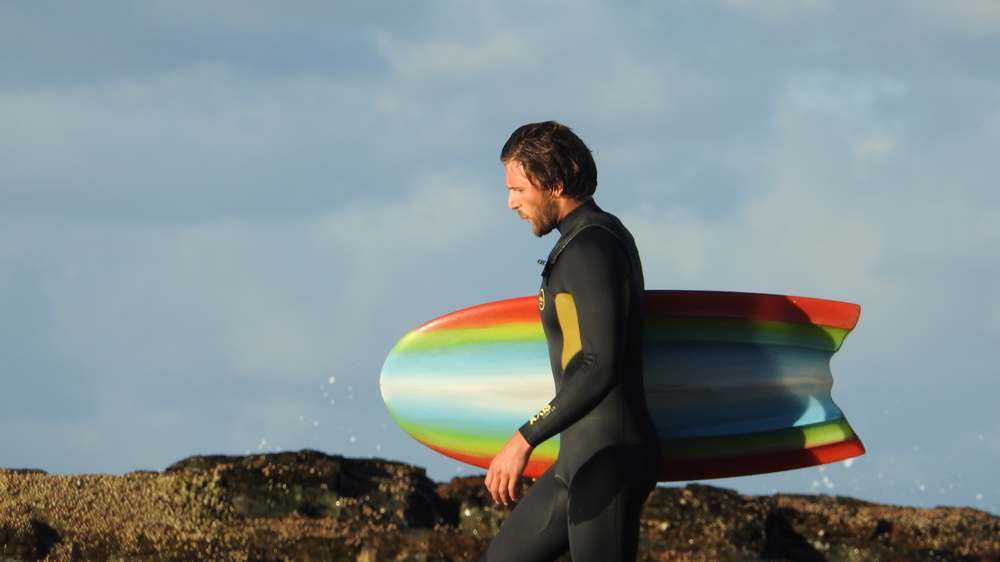
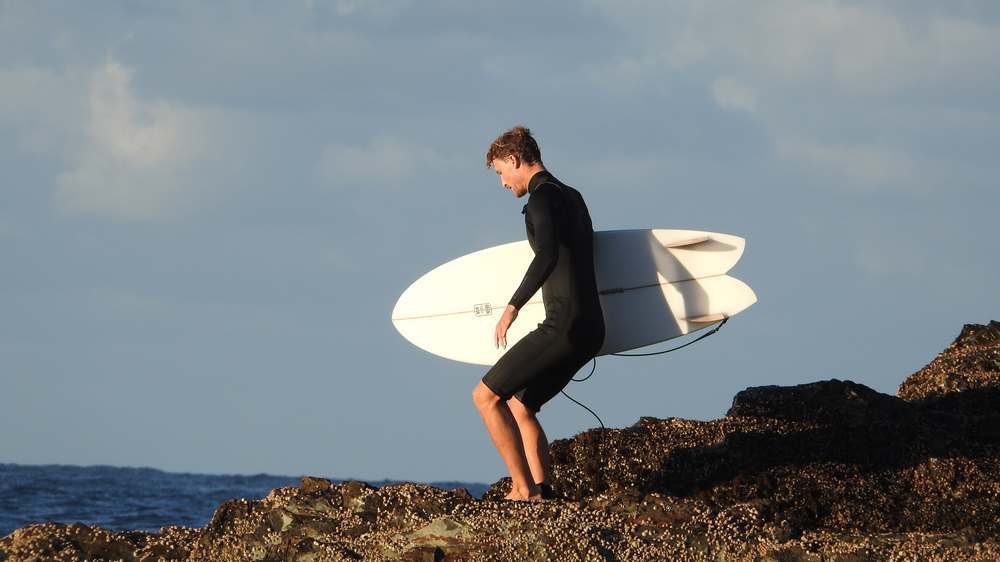
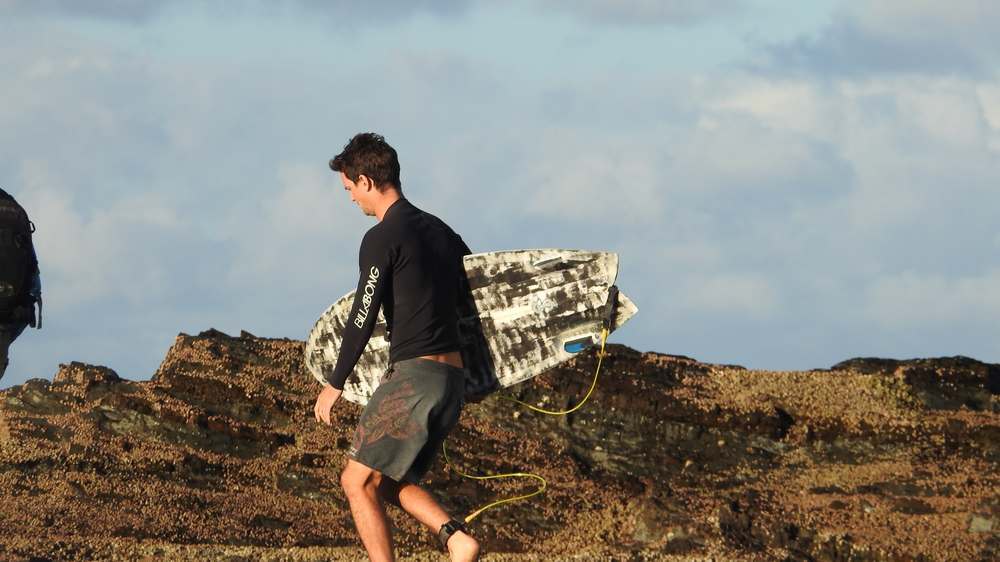
Many versions of the twinnie have evolved since, and thanks to Mark and a few other high-profile surfers, the model is currently enjoying a massive resurgence in popularity. After trialling five different fin combinations on our twin fins, Phil and I both choose to ride them with a small rear trailer fin. Mark Richards was using this exact combo at Angourie in the '90s when we took a few winter trips to the North Coast. This setup gives the board some down-the-line drive to combine with the incredible speed that a twinnie produces almost effortlessly.
Because of the larger surface area of the side fins, our tech expert, John Fields, came up with a longer, stronger surfboard fin box that easily handles the extra pressures associated with larger fins. Below are just a few models available in-store, plus a few from previous Way Back When episodes.